
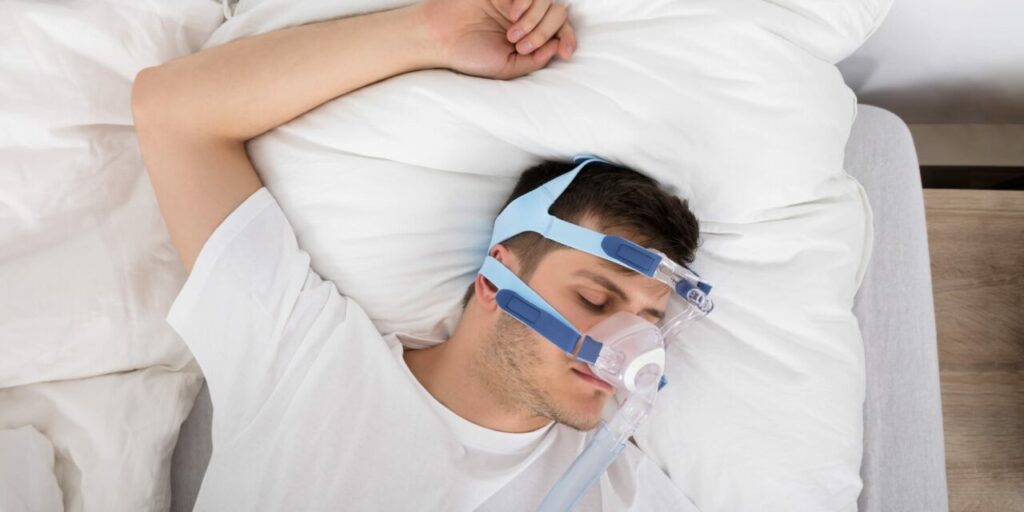
Quality sleep shouldn’t come at the cost of your evening relaxation. For many Australians, the hardest part of starting CPAP therapy isn’t the air pressure—it’s the feeling of being “locked in” by a bulky mask that blocks their view. If you enjoy winding down with a novel or catching up on the news while wearing your spectacles, a traditional mask with a forehead support bar can be a deal-breaker.
The good news is that modern sleep medicine has evolved. Today, there are several top CPAP masks for people who read or wear glasses in bed that use “under-the-nose” cushions and minimal frames. These designs maintain a medical-grade seal without obstructing your line of sight, allowing you to maintain your nightly rituals while treating sleep apnoea.
See more: Crystal Clear Vision: Navigating the Benefits of Cataract Surgery
Why Traditional CPAP Masks Clash with Reading and Glasses
Most legacy CPAP masks feature a T-bar or forehead stabilizer. While these provide excellent seal stability for high-pressure settings, they create a physical barrier directly in front of the eyes.
For those who wear glasses, this bar makes it impossible to seat frames correctly on the bridge of the nose. For readers, the bulky plastic frame creates a “blinkered” effect, forcing you to tilt your head awkwardly to see the page or screen.
By switching to a low-profile interface, you eliminate:
- Visual Obstruction: No more plastic bars in your peripheral or direct vision.
- Physical Interference: Room for your glasses to sit naturally on your face.
- Claustrophobia: A more “open” feeling that helps with therapy compliance.
The Best CPAP Masks for Bedtime Readers: Top Picks for 2026
When selecting a mask that accommodates glasses and reading, we look for two specific design elements: an open field of vision and minimal facial contact. Here are the leading options currently available in Australia.
1. ResMed AirFit F30 & F30i (Full Face)
If you are a mouth breather but still want to read, the AirFit F30 series is a game-changer. Unlike traditional full-face masks that cover the bridge of the nose, the F30 sits under the nose.
- Why it works: The “ultra-compact” cushion frees up the entire bridge of your nose, so your glasses sit exactly where they should.
- The “i” Advantage: The AirFit F30i features a top-of-head tube connection, meaning the hose won’t hang in front of your book or tablet.
2. Philips DreamWear (Nasal or Full Face)
The DreamWear system is famous for its “tubular” frame where air flows through the headgear itself.
- Why it works: It has one of the most minimal footprints of any mask on the market. There is absolutely nothing in front of your eyes.
- Versatility: You can swap between nasal cushions, pillows, and full-face seals using the same frame.
3. Fisher & Paykel Evora (Nasal)
The Evora uses a “Cap-fit” headgear that you put on just like a baseball cap.
- Why it works: It features a unique compact seal that wraps around the nose without climbing up towards the eyes. It’s exceptionally stable for readers who might move their heads frequently while looking between a book and a bedside lamp.
4. ResMed AirFit P10 (Nasal Pillows)
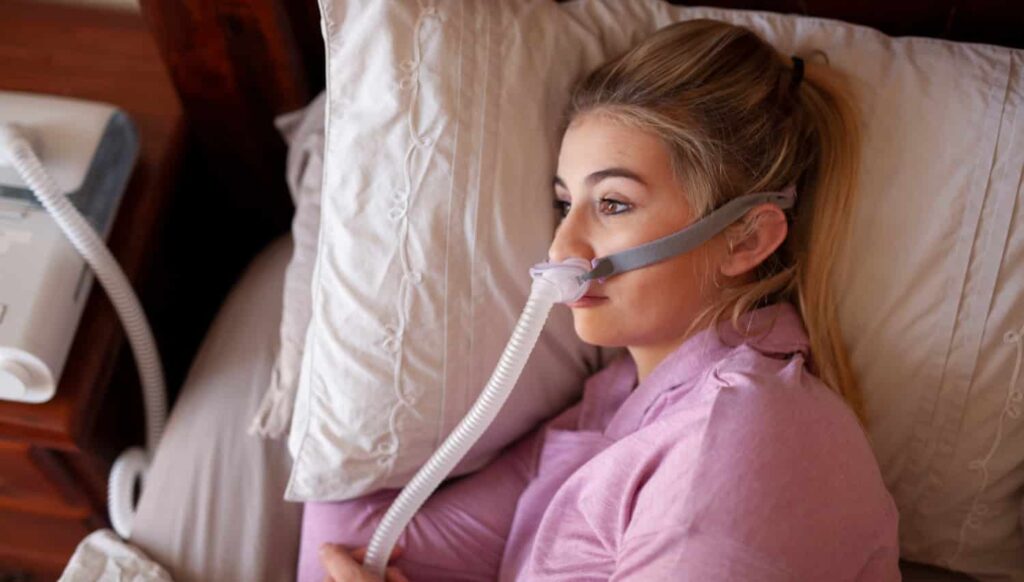
For the ultimate minimalist experience, the P10 is often cited as the “invisible” mask.
- Why it works: It consists of two small silicone buds that sit at the entrance of the nostrils and a thin fabric strap. It is arguably the best CPAP mask for people who wear glasses because there is zero frame interference.
Comparison Table: Low-Profile CPAP Masks
| Mask Model | Type | Best For | Vision Clarity |
| ResMed AirFit F30i | Full Face | Mouth Breathers / Active Sleepers | Excellent (Open) |
| Philips DreamWear | Hybrid | Versatility / Minimalists | Superior (Total) |
| F&P Evora | Nasal | Stability / Ease of Use | Excellent (Open) |
| ResMed AirFit P10 | Nasal Pillow | Lightweight / Quiet | Superior (Total) |
How to Choose the Right Mask for Your Lifestyle
Choosing a mask isn’t just about the “look”—it has to perform. Follow this framework to ensure your lifestyle choice doesn’t compromise your health.
Step 1: Identify Your Breathing Style
If you breathe through your mouth at night, a nasal pillow mask (like the P10) will likely fail unless paired with a chin strap. Mouth breathers should stick to “ultra-compact” full-face masks like the ResMed F40 or AirFit F30.
Step 2: Check Your Pressure Settings
Higher air pressures (above 15 cmH2O) can sometimes cause leaks in minimal masks. If your prescription is high, look for a mask with a “cradle” seal rather than just pillows, as they offer more surface area to maintain the seal.
Step 3: Test with Your Glasses
When trialling a mask at an Australian sleep clinic, bring your reading glasses with you. Put the mask on, turn the machine on to your therapy pressure, and then try to put your glasses on. Check for:
- Pinching at the bridge of the nose.
- The mask pushing your glasses up (blurring your vision).
- Air blowing into your eyes from the top of the seal.
Expert Tips for Using CPAP While Reading
- Use a Hose Hanger: If you don’t use a “tube-up” mask (like the N30i or F30i), a hose hanger can keep the tubing from draped across your book.
- Adjust the Ramp Feature: If you find the air distracting while trying to focus on a story, ensure your “Ramp” setting is active. This starts the pressure low and gradually increases it as you fall asleep.
- Side-Reader Hack: If you read lying on your side, look for masks with “soft frames” (like the DreamWear) to prevent the frame from pressing into your cheek.
Common Mistakes to Avoid
- Overtightening to Compensate: Users often overtighten minimal masks to stop leaks, which can leave red marks. Modern seals are designed to “inflate” with air; they should be snug, not tight.
- Ignoring the “Vent”: All masks have a CO2 vent. Ensure your book or tablet isn’t blocking this vent while you read, as this can cause “rainout” (condensation) or air starvation.
- Skipping the Fit Pack: Many Aussie retailers offer “Fit Packs” containing multiple cushion sizes. Always opt for these to ensure you find the exact fit for your facial structure.
Frequently Asked Questions
Can I really wear my glasses with a CPAP mask?
Yes. By using a “nasal cradle” or “under-the-nose full face” mask, the bridge of your nose remains clear, allowing glasses to sit in their natural position.
What is the best CPAP mask for a side sleeper who reads?
The ResMed AirFit N30i or Philips DreamWear Nasal are excellent. The top-of-head tube connection allows you to lie on either side without the hose getting in the way of your book or your pillow.
Will a low-profile mask leak more than a traditional one?
Not necessarily. While they have less surface area, modern “InfinitySeal” and “AutoFit” technologies are designed to maintain a seal even during movement. However, proper sizing is more critical with these models.
Are these masks available in Australia?
Yes, all models mentioned (ResMed, Fisher & Paykel, and Philips) are TGA-approved and widely available through Australian sleep clinics and online retailers.
Do I need a new prescription to change mask types?
In Australia, you generally do not need a new prescription just to change a mask, but it is highly recommended to consult with your sleep scientist to ensure the new mask style handles your prescribed pressure effectively.
Conclusion: Reclaiming Your Bedtime Ritual
Finding the top CPAP masks for people who read or wear glasses in bed is about more than just comfort—it’s about removing the barriers to your therapy. When your mask fits your lifestyle, you are much more likely to stick with your treatment long-term. Whether you prefer the weightless feel of the AirFit P10 or the reliable coverage of the AirFit F30i, there is an Australian-available solution that lets you keep your glasses on and your book open.
Would you like me to create a printable “Mask Fitting Checklist” you can take to your next sleep specialist appointment?
Internal Linking Suggestions:
- Best CPAP Machines for Travel in Australia
- How to Clean Your CPAP Mask: A Step-by-Step Guide
- Understanding Sleep Apnoea: Symptoms and Treatments
External Authority References:
- Sleep Health Foundation (Australia)
- Australasian Sleep Association